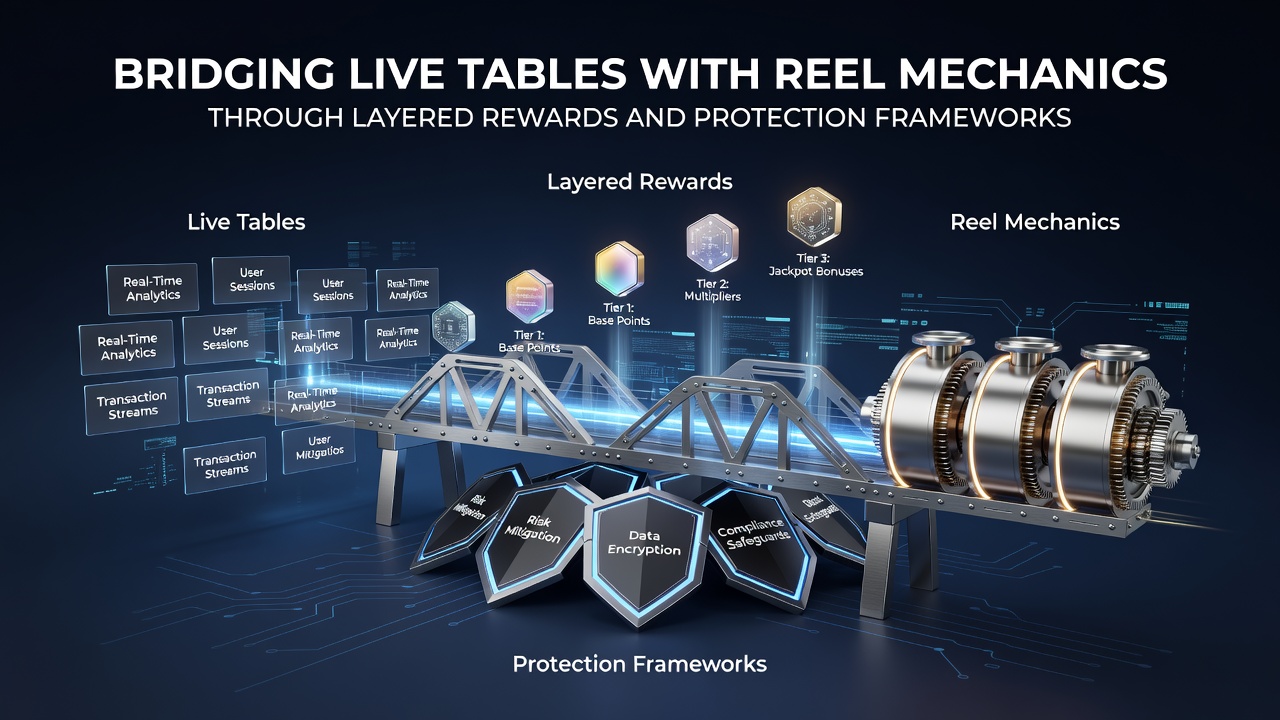
Hybrid Dynamics Unite Live Tables and Reel Mechanics via Tiered Rewards and Safety Systems
Operators blend live table environments with reel-based systems through shared loyalty structures that track activity across both formats and apply consistent protection measures. Data from multiple regions shows platforms allocating points from blackjack sessions directly into slot progress bars while maintaining unified account limits on deposits and session times. In October 2026 industry tracking revealed increased deployment of these cross-format bridges in markets outside the UK, with operators citing smoother player retention when rewards scale automatically between game types.
Mechanics of Integration Across Formats
Live tables generate real-time data streams that feed into reel engines through centralized servers, allowing a single spin sequence to inherit multipliers earned at the table. Researchers at academic institutions have documented how this linkage creates continuous engagement loops without requiring separate logins or balance transfers. American Gaming Association reports highlight that such systems rely on API connections that update player profiles instantaneously, ensuring jackpot contributions accumulate from both table wagers and reel bets under one progressive pool.
Protection frameworks operate at the same layer, applying time-based alerts and loss thresholds uniformly regardless of whether activity occurs on a live dealer feed or automated reels. Those who study implementation note that verification protocols refresh across the combined ecosystem rather than resetting per game category, which reduces duplication while maintaining regulatory compliance in jurisdictions like Nevada and several Australian states.
Layered Reward Structures in Practice
Rewards stack in tiers that activate after reaching cumulative thresholds measured in total handle across tables and reels. One common model awards free reel spins once table play reaches a set volume, then escalates to cashback percentages that apply retroactively to both formats. Figures from the European Gaming and Betting Association indicate these layered programs correlate with higher average session lengths in monitored markets, though exact causation remains under review by independent analysts.
Additional tiers unlock personalized bonus rounds that blend live elements, such as dealer-hosted multipliers, with reel-triggered jackpots. Observers note that operators test these hybrids during peak periods to refine pacing, ensuring the transition between table decisions and reel outcomes feels seamless rather than abrupt. Studies from university gambling research centers have examined player navigation patterns and found that clear visual cues, like shared progress meters, help maintain continuity.

Protection Frameworks Operating in Parallel
Safety tools run concurrently with reward delivery, pausing play when predefined limits approach across the entire portfolio rather than within isolated sections. Canadian regulatory summaries describe mandatory cooling-off periods that activate after combined table and reel exposure reaches daily caps, with notifications delivered through the same interface used for bonus claims. This parallel operation prevents reward chasing from overriding self-imposed boundaries.
Encryption standards cover data flows between live streams and reel servers, while audit logs record every reward redemption and protection trigger for review. Those who monitor compliance across regions report that unified dashboards simplify oversight for both operators and external reviewers, allowing quicker identification of unusual patterns that span multiple game types.
Regional Variations in Adoption
Markets in North America and parts of Asia-Pacific have advanced these integrations faster than others, often because licensing frameworks already accommodate multi-format operators under single entities. Australian government gaming statistics from mid-2026 showed measurable uptake of cross-format loyalty in licensed venues, with protection reporting requirements extended to cover aggregated activity. European operators, guided by association guidelines, emphasize transparency in how tiers convert between live and reel contributions to meet varying disclosure rules.
Implementation timelines vary, yet common threads include phased rollouts that begin with reward synchronization before full protection integration. Data indicates that early adopters refined their systems after initial player feedback sessions, adjusting notification frequency and tier visibility to avoid overwhelming interfaces.
Conclusion
Bridging mechanisms continue to evolve as operators refine connections between live tables and reel systems while embedding protection layers at every reward stage. Regional reports and industry data underscore steady expansion of these frameworks through 2026, supported by technical standards that prioritize both continuity and safety across formats.